

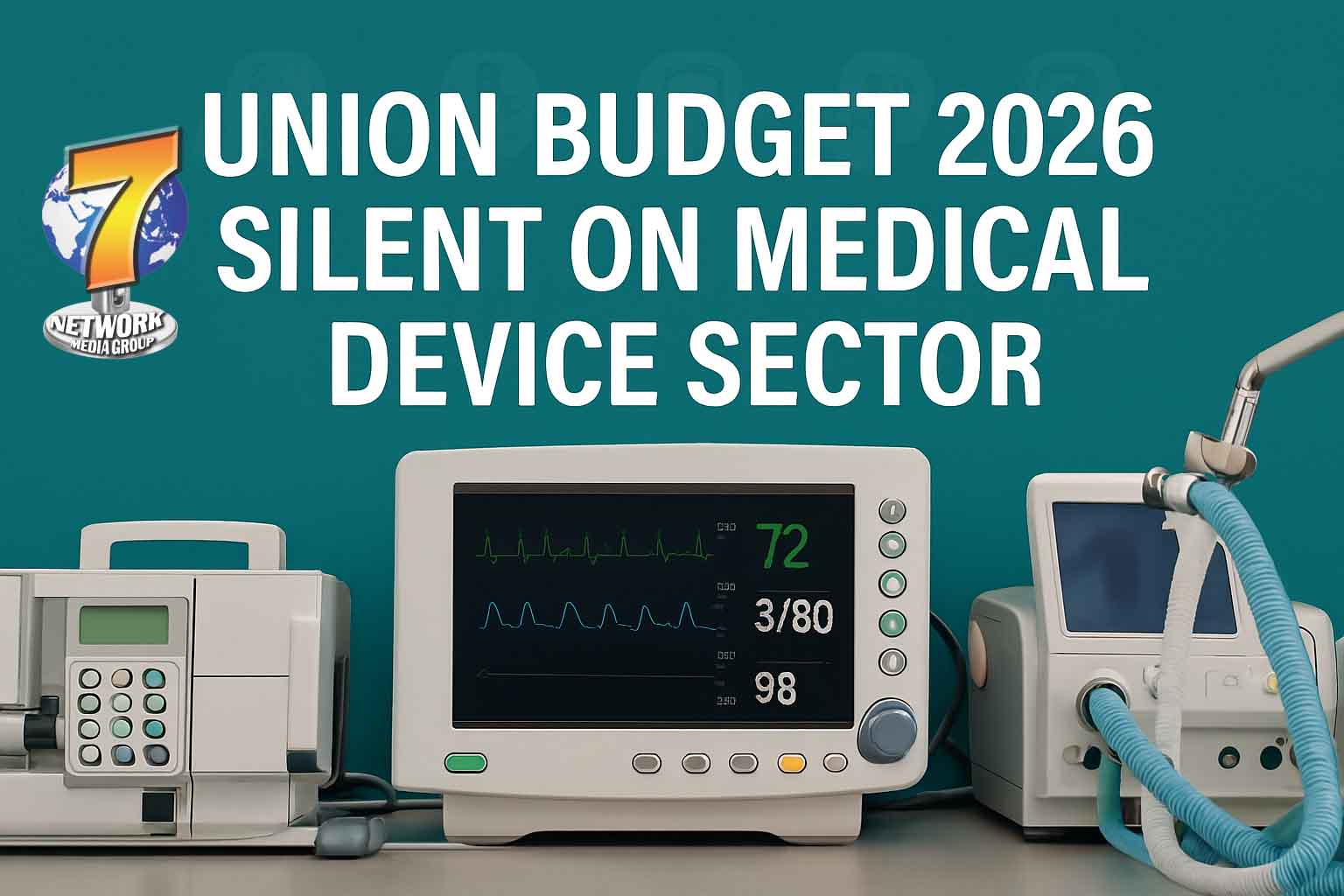
Union Budget 2026 Silent on Medical Device Sector?

India’s Policy Blind Spot? Growth Ambitions Clash with Healthcare Reality
Missed Expectations
Despite the medical device sector being a cornerstone of India’s healthcare infrastructure, Union Budget 2026 failed to announce any targeted reforms such as:
- Rationalization of GST slabs for devices
- Dedicated R&D incentives
- Ease of regulatory compliance
- Support for indigenous innovation and exports
Industry insiders had hoped for a Medical Device Parks Expansion Scheme, a single-window clearance system, and PLI (Production Linked Incentive) enhancements, but none were addressed in the Budget speech.
Healthcare Focus, But Narrow Scope
While the Budget did include broader healthcare measures—such as customs duty exemptions on cancer drugs, Ayush expansion, and AI-driven medical education initiatives—these were not extended to medical devices, which remain heavily import-dependent and cost-intensive.
Industry Reaction
Healthcare leaders expressed disappointment, noting that diagnostics, surgical tools, and therapeutic devices continue to face high costs and fragmented regulation. The lack of reform is seen as a barrier to:
- Affordable care delivery
- Medical tourism competitiveness
- Rural healthcare access
Strategic Implications
India’s ambition to become a global healthcare hub hinges on robust device manufacturing. The Budget’s silence:
- Undermines Make in India goals
- Delays self-reliance in critical health tech
- Weakens India’s export potential in medtech
Dr. Satya Brahma, Editor-in-Chief of Network 7 Media Group, offered a sharp critique:
“The Union Budget 2026 speaks of digital health and pharma innovation, but remains conspicuously silent on medical devices. This omission is not just technical—it’s strategic. Without empowering the medtech backbone, India’s healthcare vision remains incomplete.”
Union Budget 2026 may have advanced infrastructure and pharma, but its lack of attention to medical device reforms signals a policy blind spot. For a sector that directly impacts diagnostics, surgery, and patient outcomes, this silence is both puzzling and problematic.